


Scene Four
You do not represent us
A story about the Russian parliament becoming a gathering of the worst people in the country
Characters:
Nikita Chaplin, Andrei Makarov, Sergei Krivonosov, Jamaladin Gasanov, and 526 other members of the Russian Federal Assembly with their family members, both known and secret
6
At first glance, United Russia member Nikita Chaplin, who represents the Moscow Oblast in the State Duma, does not fit the caricatured image of a Russian official. He is a young, smiling brown-haired man with dimpled cheeks, well-educated, articulate, with a brilliant career (at 24 he was a member of the Moscow Regional Duma, at 31 he was its deputy chairman, and at 39 he became a federal parliamentarian) and, most importantly, of noble birth. Had he been born in England, he would have been a lord, inheriting a seat in the House of Lords. In Russia, there are no such titles, but Chaplin did inherit a seat in the lower house of parliament through several lines of his large and influential family.
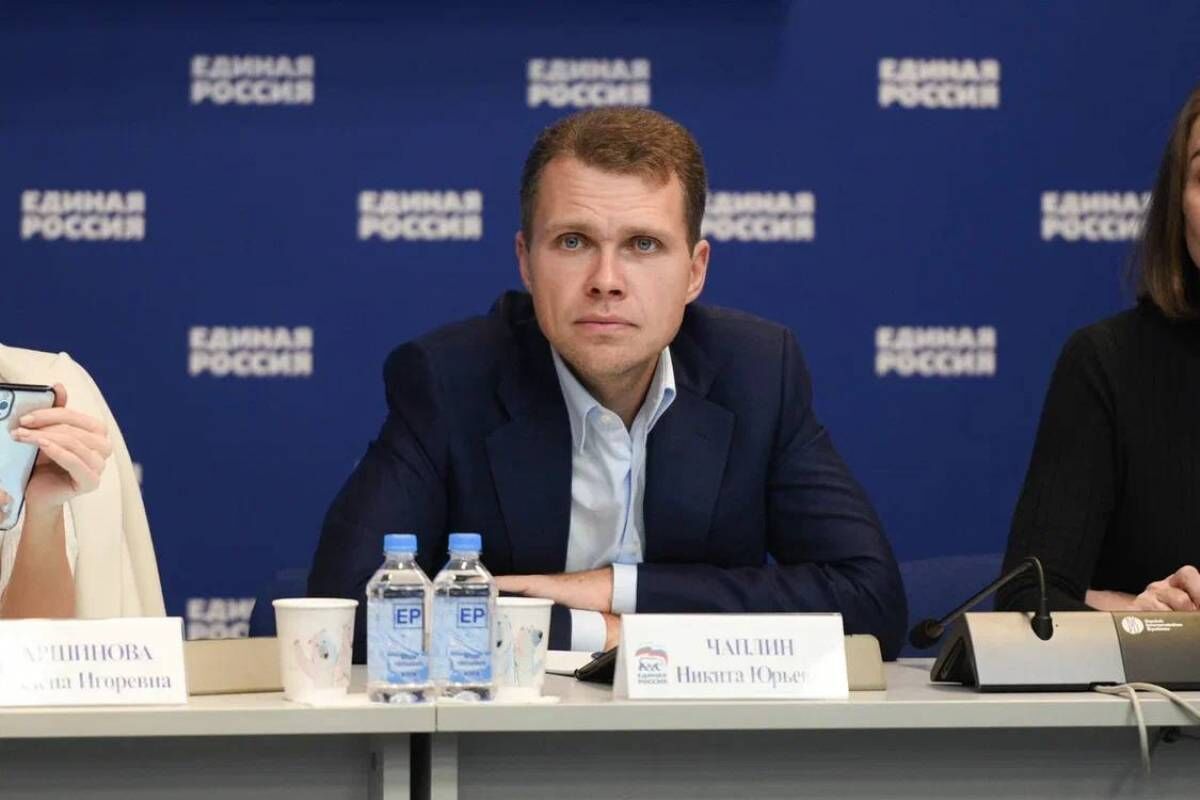
The MP’s great-grandfather was a member of the Moscow Soviet right after the 1917 revolution, and his grandfather was the director of a major instrument-making plant in Ramenskoye, near Moscow. Finally, the MP’s father, Yuri Chaplin, went even further. Starting (clearly with the patronage of his father-in-law) as the head of the Komsomol in Ramenskoye, he reached the position of member of the Federation Council in the new Russia, where he served for 10 years, and also had a chance to work in the Presidential Administration and the government of several regions (including the Moscow Oblast, which is now represented in the Duma by his son). The MP’s mother also worked in parliament (more precisely, in the State Duma apparatus) for some time. But that’s only half of the Chaplin family story.
Nikita married the heiress of another aristocratic family. His wife Natalya is the daughter of Tatyana Nesterenko, who was also once a State Duma member and then worked for many years as Alexei Kudrin’s deputy in the Ministry of Finance. When President Dmitry Medvedev dismissed Kudrin in 2011 as a result of a high-profile scandal, it was Nesterenko who took on the role of representative of the Ministry of Finance at cabinet meetings.
But that is not her main achievement. The media suspected that the deputy minister was lobbying for the interests of the bookmaking business and could thus be assisting her second son-in-law. While her younger daughter Natalya is married to a State Duma member, the husband of her older daughter Marina is businessman Mikhail Danilov, former co-owner of the bookmaking companies Bingo Boom and Star Bet, as well as a gambling business in Sochi 
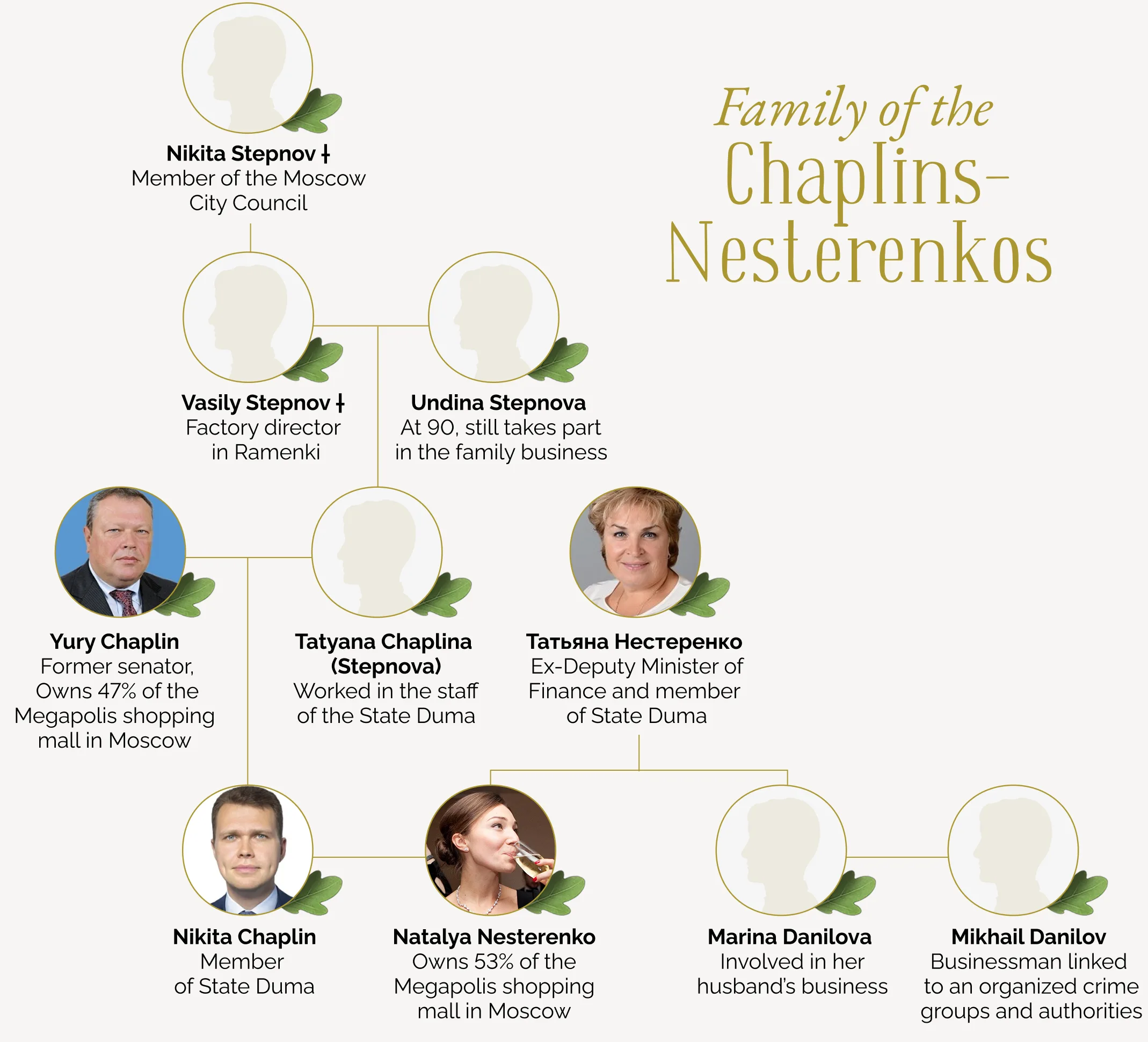
Using their official positions for family gain is a trait shared by the entire Chaplin-Nesterenko family. Their main source of enrichment is the Moscow Oblast, which the young MP represents in parliament and whose prosperity he is supposed to ensure. In the early 2010s, when Nikita was a member of the Moscow Oblast Duma and his father was a senator, Boris Gromov, then governor of the Moscow Oblast, made 1,500 hectares of the Rublyovsky Forest parts of nearby settlements. This opened up lots of money-making opportunities for the Chaplins, because the decision meant that now the right people could use the super expensive, if not priceless, land on Rublyovka for development. Here’s how it worked: companies registered under the name of the MP’s elderly grandmother, Undina Ilyinichna Stepnova Sergei Shoigu and then Andrei Vorobyov (Shoigu is like a second father to him, and his real father has been working as vice chairman of the Federation Council for many years), Undina’s grandmother transferred part of the land to relatives of the new regional leaders Elena Antipina has a stake — it is a common practice to hide valuable assets behind such distant relatives
×
. Apparently, thanks to this adaptability, the family is still very active in the Moscow Oblast — 90-year-old Undina Stepnova still owns companies in the region that are involved in tourism and recreation.
So although Chaplin does not look like a hardened bureaucrat, he is in fact a typical parliamentarian of the Putin era. As our study will show, State Duma and Federation Council members represent anyone and anything, but not the population of the regions from which they came to Moscow.

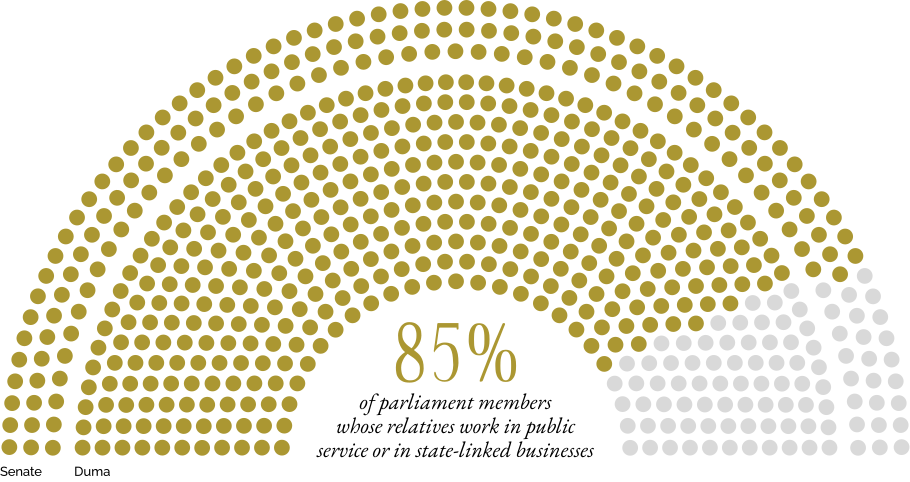
The Russian parliament is the place with the highest concentration of family ties among all the government bodies that Proekt studied as part of its study “Fathers and Grandfathers.” In total, we counted 526 people in the State Duma and the Federation Council whose relatives are active in public service or state-related business (372 out of 443 in the State Duma and 154 out of 179 in the Federation Council). That’s 85% of all Duma members and senators.
Cases vary. Some parliamentarians hire their children, wives, and mistresses as their own assistants and staff members. Others continue the dynasties of their older relatives who worked as bureaucrats or sat in regional legislative assemblies.
State Duma member Jasharbek Uzdanov has a disappointing achievement to his name: since his election in 2021, he has not attended a single session. He had been an active person all his life: he ran a business and was involved in politics in his native Karachay-Cherkessia, and most importantly, he was close to the head of the region, Rashid Temrezov. For this, Uzdanov was sent to the Duma. Soon, however, it became clear that the parliamentary seat was a deathbed gift to him. Uzdanov did not attend the sessions because he was already seriously ill when the parliament was formed. He died in 2023. By-elections to the parliament were immediately organized in Karachay-Cherkessia, and the vacant seat went to 25-year-old Soltan Uzdanov, the son of the deceased.
Chechen Vakha Agayev is an important figure in the Caucasus. He was close to both the head of Chechnya Ramzan Kadyrov and the founder of Russneft, Ingush Mikhail Gutseriev, whose partner and friend he has been for many years.
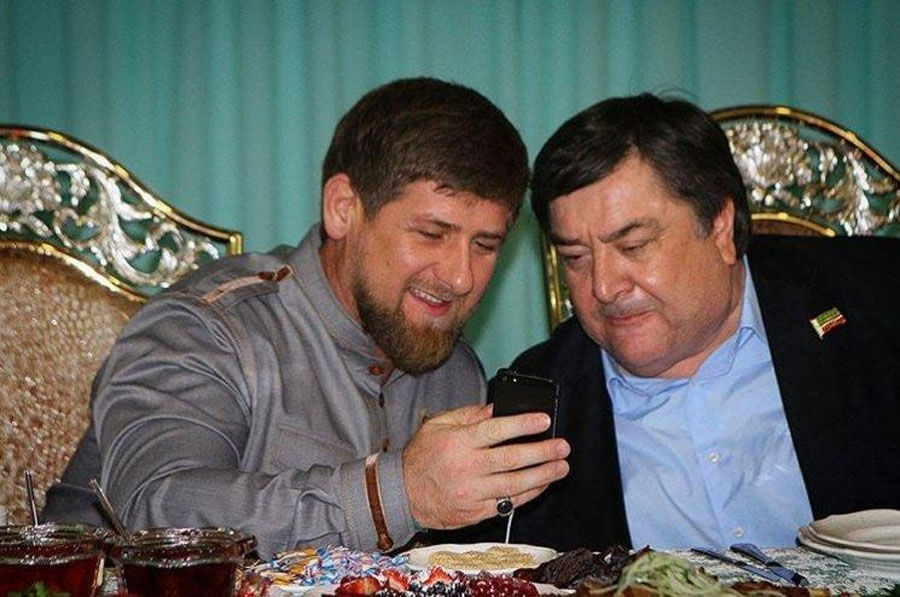
The oligarch valued his comrade so much that in 2011 he decided to send to the Duma not only Vakha, but also his son Bekhan Agayev. The authorities tried to keep things civil, though which only made the whole story look even more comical. The father and son were sort of split up: Vakha was elected to the Duma on the Communist Party ticket in the Krasnoyarsk Krai, and his son was elected on the United Russia ticket in Udmurtia. The Agayev family had no meaningful connection to either of these regions. This is also a distinctive feature of our parliament: almost one in five Duma members and senators (119 people, or 20% of the total number of parliamentarians in both chambers) have no connection to the territories they represent.
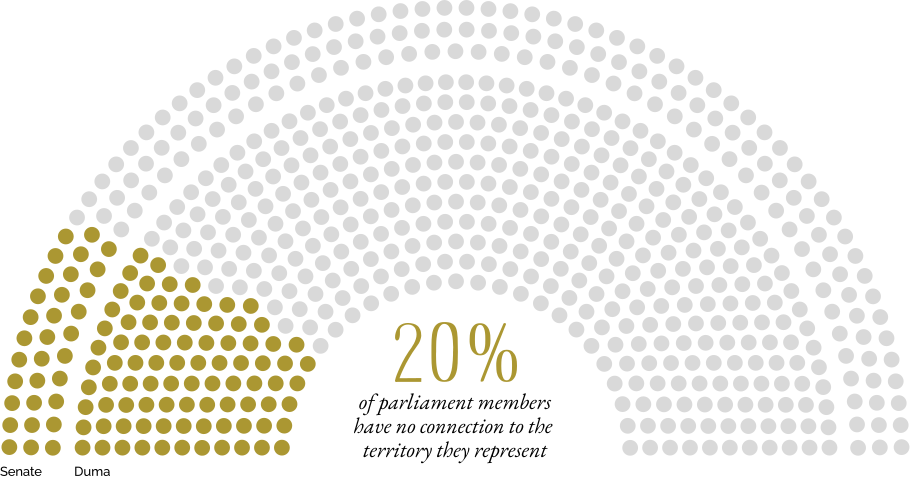
The simultaneous nomination of the Agayevs to the State Duma did not go unnoticed. In Udmurtia, locals organized a protest rally against the outsider. Agayev Jr. was not recalled, of course, but he did not dare to run for the next State Duma session, focusing instead on the family business, while his father continued to sit in the Duma. No one knows how this family saga could have unfolded if Agayev Sr. had not passed away from COVID-19 in 2020. Gutseriev publicly mourned the death of his friend, but he did not stop there: after the next election, Agayev Jr. returned to the Duma. Ironically, this heir, just like Chaplin, now also represents the Moscow Oblast, to which he has no connection other than owning a luxurious house in the Moscow suburb of Rublyovka.
In total, there are 15 “direct heirs” (i.e. people whose mothers or fathers were also Duma members or senators in the past) sitting in both houses of parliament.
Parliamentarians by inheritance

There are other kinds of dynasties in the State Duma as well though.
“Everything possible was done to conceal the truth about the secret ties between Zionists and the Third Reich,” says the narrator’s solemn voice against a backdrop of sad music. In the mid-1970s, retired KGB agent Dmitry Zhukov wrote the script for the film The Secret and the Obvious (The Goals and Deeds of Zionism) on behalf of the KGB, which recounts the events of the 20th century from the perspective of a staunch anti-Semite. The author directly blamed Jews and Zionists for almost all disasters: “Strangely enough, all the disasters that twice befell Europe and Russia in the 20th century are surprisingly intertwined with the benefits and growth of imperialism and international Zionism,” the same announcer continued.
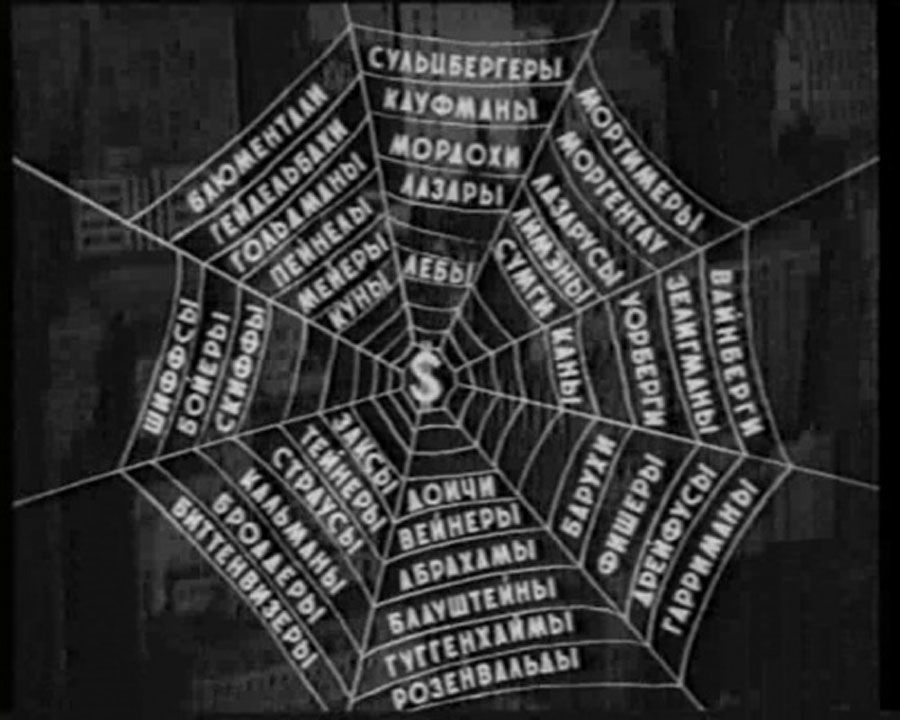
They did not dare to put the film into wide release, especially since the authors used graphics from Goebbels’ film The Eternal Jew to illustrate their ideas, which looked completely bizarre. Nevertheless, Zhukov continued to play a prominent role in the USSR, joining the so-called “anti-Zionist circle” and leading the nationalist “Russian Club” (from which many leaders of modern Russian nationalism would later emerge). Dmitry Zhukov’s son Alexander made a brilliant career: after graduating from Moscow State University and Harvard, he was elected to the State Duma representing the democratic forces in the 1990s and became deputy prime minister in the 2000s, naturally changing his party affiliation along the way and ultimately becoming one of the faces of United Russia.
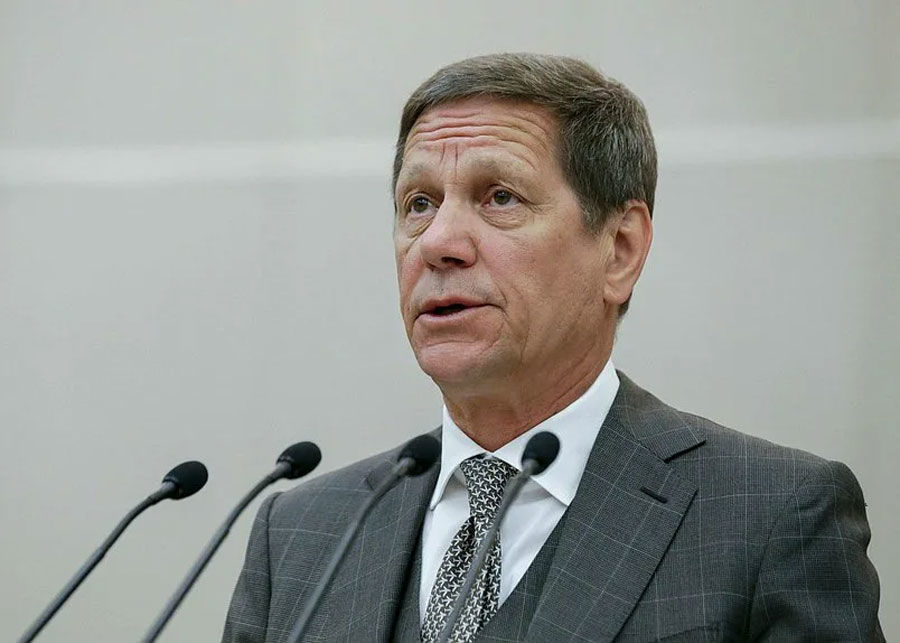
For the past 14 years, Zhukov, a native Muscovite, has been the first deputy chairman of the State Duma. In his latest term, he represents the Siberian regions, where he has never lived a single day. Of course, unlike his father, he does not make anti-Semitic films, but he does draft repressive laws, also intended to establish the “truth” (from the authorities’ point of view) about the events of the 20th century. Zhukov was one of the authors of the law introducing punishment for “equating the actions of the USSR with those of Nazi Germany” (this can now result in a fine or administrative arrest).
Another native Muscovite, whose family is a living illustration of the connection between the USSR and the Third Reich, voted in favor of Zhukov’s law in the Duma. We are talking about Vyacheslav Nikonov (who, for some reason, represents the Rostov Oblast), the grandson of Stalin’s foreign minister Vyacheslav Molotov, who signed the 1939 pact dividing Eastern Europe with Hitler’s minister Joachim Ribbentrop.
Some parliamentarians consider their dynasties to be truly ancient. For example, former Deputy Prime Minister and now Senator from the Zaporizhzhia Oblast (which he has no connection to) Dmitry Rogozin is proud not only of his father, a lieutenant general in the Soviet Army. In his book
Rogozin probably intended this historical fact to be a hint at his role in present-day Russia. However, the real hint lies in another fact from his family history. The senator himself was once a victim of the fight against clan-based politics. In the 1980s, he was not allowed to pursue a career in the KGB because his father-in-law held a senior position there (even in the USSR, this was considered a conflict of interest). However, Rogozin now has nothing against family ties – as soon as he took the post of deputy prime minister responsible for the military industry in 2011, his 29-year-old son Alexei became the head of a plant that produces and recycles ammunition. The young man quickly rose through the ranks, soon becoming deputy director of one of the most lucrative departments of the Ministry of Defense – the property relations department.
The parliament (just like other branches of government) also has “reverse dynasties” — cases when an official who has risen through the ranks brings his ancestors into the civil service. Nikolai Shcheglov was born into a family of officials, albeit not of high rank — his father headed the Trubchevsky District of the Bryansk Oblast in the late 1980s. Nikolai worked as a surgeon at the Bryansk City Hospital his entire life and even rose to the position of chief physician, which was apparently the peak of his career. His son Alexei went further: he had a brilliant medical career in Moscow, getting a job at the Central Clinical Hospital and becoming Putin’s personal ENT specialist, constantly accompanying him on trips around the country. It was then that Nikolai Shcheglov experienced a new lease on life: first he was appointed deputy governor of Bryansk Oblast, and then got a seat in the State Duma. The rest of his family also got involved: the MP’s brother headed the Bryansk branch of Rosselkhoznadzor for many years, and then the Plant Quarantine Center in Moscow, while his family started a “dairy” business that received more than 180 million rubles in state subsidies.
However, there is one particularly noteworthy dynasty in parliament that best illustrates another phenomenon: Russian government is full of genuine criminals, crooks, shady characters and con artists who have nevertheless been given cover by those at the top for years because they are the right kind of crooks.
One of the seats from Adygea in the Federation Council is occupied by 47-year-old Murat Khapsirokov. The senator’s father Krym-Geri (known to his friends as Nazir) Khapsirokov was a Komsomol member in Karachay-Cherkessia in the 1980s.
In the early 1990s, he was so closely involved with fraudsters that he earned himself the telling nickname “Khaps” or “Khapsik” (which can roughly be translated as “grab-all”) in this milieu. But then he unexpectedly became the chief administrator of the Prosecutor General’s Office. When recalling Khapsirkov Sr., two politicians of that time did not mince words in their assessments: he was a corrupt official of the highest order. But even such a person found a place in the system. In the late 1990s, Khapsirkov, together with banker brothers Ashot and Suren Yegiazaryan, provided private entertainment for his boss, Prosecutor General Yuri Skuratov. Skuratov’s meetings with prostitutes at the Yegiazaryans’ secret apartment were recorded on video, most likely on the orders of the KGB.
One of the tapes was released in early 1999, when the Kremlin, with Khapsikov’s help, needed to get rid of the stubborn prosecutor general. The operation to discredit and remove Skuratov was overseen by the young head of the FSB, Vladimir Putin
In 2000, he was suspected of another bribe, but this did not hinder his brilliant career in the slightest. Under Putin, Khaps was appointed assistant to the head of the Presidential Administration, where he worked until his death in 2011. Upon Khapsikov’s death, the government newspaper Rossiyskaya Gazeta published an obituary with the following words: “He achieved everything in this life through his own labor, without outside help or patronage”
Another member of the Federation Council with Caucasian roots (read here about the genealogical characteristics of officials from this region) is Maxim Kavdzharadze. His criminal career began literally in his teenage years, when he was caught twice for petty theft and brutally beating a peer. For this, he was sent to a special vocational school and forced labor. Kavdzharadze then joined the Orekhovskaya gang and, among other things, provided wealthy Muscovites with car passes to the State Duma and the Federation Council for a fee. In other words, his career advancement was extremely rapid: from parking attendant at the parliament building to legislator.
To avoid questions, Kavdzharadze tried to change his biography — he wrote in questionnaires that he had no criminal record and a higher education (allegedly, he graduated from the Law Institute of the Ministry of Internal Affairs in just a few months), and even changed his surname to “Kavdisaridze” in some records, apparently to make it more difficult to discover the truth about his past
Of course, Egiazaryan is not the only paid member in the history of the State Duma. The practice of buying seats is widespread. It was for money that the aforementioned capitalist Vaha Agayev became a parliamentarian from the CPRF, and so did billionaire Vitaly Yuzhilin. Even an obvious ideological conflict became no obstacle for the communists for enough money. Bribes flourished in all factions, but the champions were always the Liberal Democratic Party, which accepted billionaire Suleiman Kerimov (his case is described in detail here), a whole gang of St. Petersburg crime bosses, and a host of other crooks on commercial terms. Based on the accounts of a former State Duma member and ex-senator, we know that the standard price for getting on a party’s electoral list was $5 million in cash. The person responsible for the LDPR’s slush fund had a telling surname – Vadim Dengin, now a senator (“dengi” means “money” in Russian).
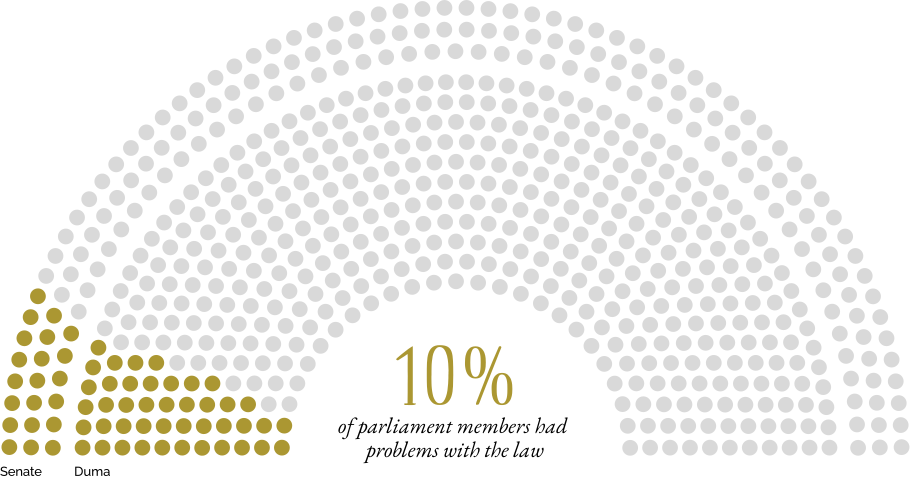
Most “commercial” MPs buy not so much proximity to power as legal immunity. Currently, there are at least 37 MPs and senators in parliament who most likely ended up there to escape criminal prosecution. In total, one in ten members of parliament may have had problems with the law in the past—at least 63 out of 625 studied, according to Proekt’s calculations.
The authorities claimed to be fighting crime in parliament. In 2011, oligarch Mikhail Prokhorov lost his position as head of the Right Cause party because he included the popular but previously convicted Yekaterinburg politician Yevgeny Roizman on the party’s ticket.
The Kremlin then declared that it would no longer allow criminals into the Duma, and therefore Roizman had no place on the ticket. Prokhorov, defending his party colleague, entered into conflict with the Kremlin and paid the price. First, they took away his Right Cause party, and then his new political project, the Civic Platform party. Paradoxically, the Kremlin entrusted the task of taking away Prokhorov’s last party to another figure with a criminal past, who is still hiding from criminal prosecution in the Duma, Rifat Shaykhutdinov. In the 2000s, he was suspected of deliberately bankrupting the Main Air Transport Agency in the interests of the aforementioned Suleiman Kerimov. But this businessman was very timely elected to the Duma on the LDPR ticket and thus avoided punishment. After he helped the Kremlin take the party away from Prokhorov, he was made a State Duma member from the Civic Platform, and when that party was no longer needed, he returned to the LDPR.
There is even a gangster dynasty in the current parliament. One of the current State Duma members is Dzhamaladin Gasanov — many of his relatives were involved in criminal activities, but the main one was always his uncle, Said Amirov. He is an experienced gang leader from Dagestan, with eight known attempts on his life reported in the press. During one of them, in the early 1990s, a bullet shattered Amirov’s spine, and since then he has been confined to a wheelchair and nicknamed Bloody Roosevelt in his circles. They called him “bloody” because people were constantly dying around Amirov. Once, his rivals blew up a car bomb near Amirov’s house, killing 18 people at once. Another time, Amirov himself, hunting down his enemy, was going to shoot down a Makhachkala-Moscow passenger plane with an anti-aircraft missile. All of this seems outrageous even for gangsters, but with Amirov, it was even worse, because this man had been a civil servant, an MP, a regional deputy prime minister, and the mayor of the capital of Dagestan over the past 24 years. He served in the latter position for 15 years in a row, regularly receiving commendations from Moscow. A few months after Amirov was named the country’s best mayor of 2012, he was arrested by FSB special forces who had flown in from Moscow specifically for this purpose.
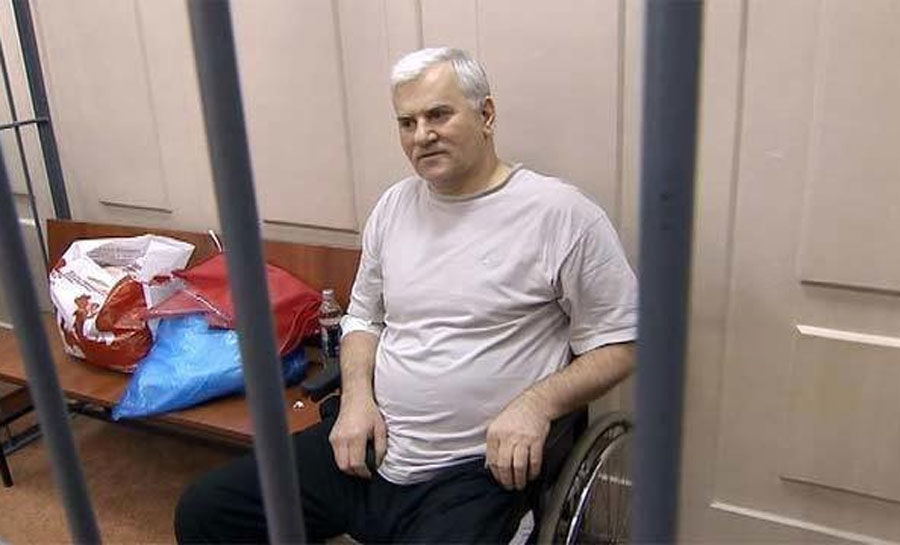
He was charged with numerous serious crimes and sentenced to life imprisonment. Here’s a tragicomic detail: on board the plane that Amirov wanted to blow up was his rival Sagid Murtazaliev, also an influential Dagestani gangster with a long criminal history. Like Amirov, he had been a distinguished official for many years, and at the time of the assassination attempt, he was the head of the Dagestan Pension Fund. Some time later, attempts were made to arrest Murtazaliev for murder, but he managed to flee abroad
All this bloody turmoil had no effect on Hasanov’s career, although he was also suspected of crimes. He has been a member of the State Duma since 2007
Murderers and gangsters in the current parliament.
-
Andrei Lugovoi
State Duma member
A former special services officer, one of the key suspects in the polonium poisoning in London of former FSB officer and defector Alexander Litvinenko. British investigations have established that the operation was “probably carried out with Putin’s approval.” Lugovoy has been in the Duma since 2007.
The MP’s wife earns money from cryptocurrency mining, and his brother from government contracts for the certification of employees of the Russian Guard, Rosatom, Rostec and Gazprom.
-
The henchmen of Chechen leader Ramzan Kadyrov are behind a number of contract killings. Delimkhanov is personally involved in the elimination of Kadyrov’s critics, including the murder of FSB officer Movladi Baisarov in Moscow. He is so untouchable that he walks around the parliament with a weapon. Geremeev was directly involved in the murder of Boris Nemtsov.
Both have relatives who hold prominent positions in the security forces and government in Chechnya.
-
Roman Teryushkov
State Duma member
Former leader of the Young Guard of United Russia, suspected of involvement in organizing the beating of journalist Oleg Kashin. The case was dropped, and Teryushkov soon became Minister of Sport for the Moscow Oblast. In this position, he appeared at public events with influential members of the Podolskaya gang, Sergei Lalakin (Luchok) and Anatoly Petrov (Petrukha).
The MP’s father Igor Teryushkov heads the industrial corporation Ecorecycling, created on the initiative of the Federation Council, which unites waste processing enterprises. It actively cooperates with the authorities and participates in the drafting of environmental legislation.
-
Boris Ivanyuzhenkov
State Duma member
One of the leaders of the Podolskaya gang, known by the nickname Rotan. Together with his vocational school classmate Sergei “Luchok” Lalakine, Ivanyuzhenkov was a member of a criminal gang known for numerous crimes, including serious ones. In 1999, when Putin had just assumed power, Ivanyuzhenkov, a master of sports in wrestling, served as Russia’s Minister of Sports.
The MP’s relatives work in the family business of managing real estate in shopping centers in Podolsk.
-
Andrei Skoch
State Duma member
Started his first business in the late 1980s together with influential entrepreneur Lev Kvetny. Both were members of the Solntsevskaya, which controlled small businesses in Moscow. As an athlete, Skoch led the gang’s enforcers. After entering politics, he sued the media over reports about his ties to gangsters and purged information about himself from the internet.
The MP’s father Vladimir Skoch and his daughter Varvara are the billionaire’s main nominees. Varvara Skoch married Evgeny Manturov, the son of Russian First Deputy Prime Minister Denis Manturov.
-
Murad Gadzhiev
State Duma member
Comes from a family of title-winning Dagestani wrestlers. In the 1970s, his father, Stanislav Gadzhiev, became a local trade union leader, which paved the way to enrichment for the family. Over time, with the help of local gangsters, they took control of several health resorts and recreation centers, a stadium, and the family’s main asset, the Derbent Cognac Factory, which the Gadzhiev family acquired in the early 1990s. Immediately after that, Murad Gadzhiev became a member of the regional parliament. In 2011, he transferred to the State Duma.
The MP’s entire family — his wife, father-in-law, brothers, and children — run the family business.
-
Nikolai Valuev
State Duma member
The St. Petersburg boxer is the former WBA heavyweight world champion. His first boxing coach was involved in “protecting” kiosks and small businesses. Gangsters took Nikolai to meetings with businessmen to intimidate them, which is why the future MP was nicknamed “Kolya the Sledgehammer”. Valuev admitted to journalists that he had once been prosecuted for extortion, but assured them that he had never hit anyone outside the ring (as reported by Izvestia).
Nikolai Valuev’s wife does business with Tatarstan entrepreneur Sirin Badrutdinov, who, in turn, earns money from contracts with the state-owned Transneft. Together, they built a technology park in the Zavolzhye industrial zone in the Ulyanovsk Oblast.
Among the dubious personalities in the Russian parliament, there are some whose success is difficult to understand at first glance. Upon closer inspection, it becomes clear that their only merit is that they have somehow pleased the country’s leaders, and nothing more.
In the winter of 2021, the legendary Malibu nightclub on the southern pier of the Sochi seaport was demolished. “This is the end of an entire era,” wrote the city’s residents on social media, recalling the boisterous parties by the sea in the early days of Putin’s rule. The club was demolished to make way for the reconstruction of the embankment, local authorities explained, and its owner was paid a billion rubles in compensation Sergei Krivonosov, a retired officer who gained access to power for his ability to entertain Putin.
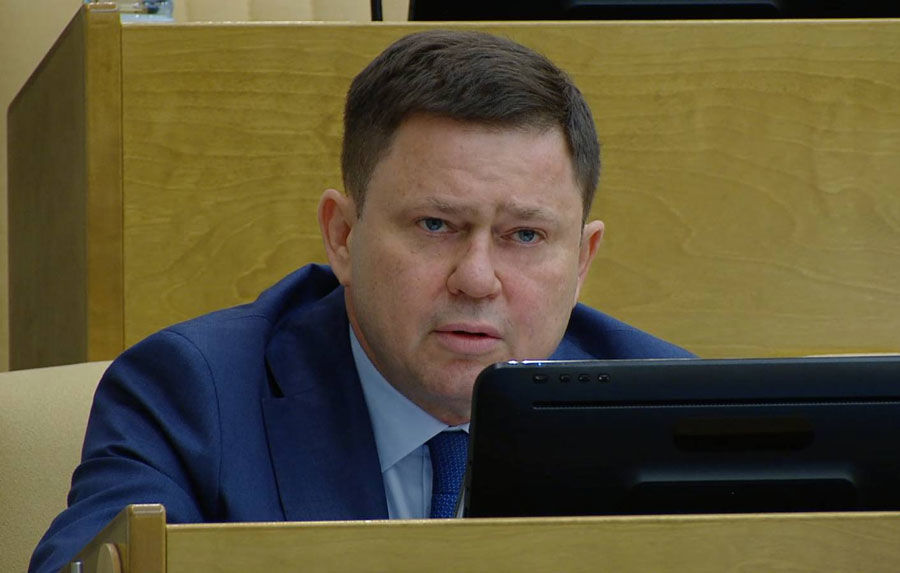
It all began in the summer of 2010, when Prime Minister Putin, actor Jean-Claude Van Damme, and fighter Fedor Emelianenko were vacationing in Sochi and visited the Plotforma club, a building erected on stilts above the sea, which resembled either an oil rig or a raft. Inside, there was a transparent dance floor with a view of the underwater world, but the place was not only suitable for dancing. A sambo tournament between Russian athletes and representatives of other countries was held there. Of course, Putin’s presence helped Russian fighters win most of the matches, but it was not the head of government who was invited to present the main award, but the club’s owner, Sergei Krivonosov. He managed to ensure that his club would host an annual international combat sambo tournament, and what’s more, the Russian elite, led by Putin, would gather there every time.
The following summer, in 2011, Putin watched with delight as Russian fighter Maxim Grishin literally destroyed the little-known Brazilian Julio Cesar de Lima in the main fight of the tournament. This was the organizers’ brilliant idea: to invite mediocre or retiring MMA fighters from abroad, whom Russian athletes would invariably defeat in front of the country’s leaders. Putin was delighted, and a few months later, Krivonosov was elected to the Duma for the first time. The president continued to visit his club. In 2012, he brought actor Steven Seagal with him, in 2013, the head of Kazakhstan, in 2014, the leaders of Armenia and Azerbaijan. Such visits continued until 2018.
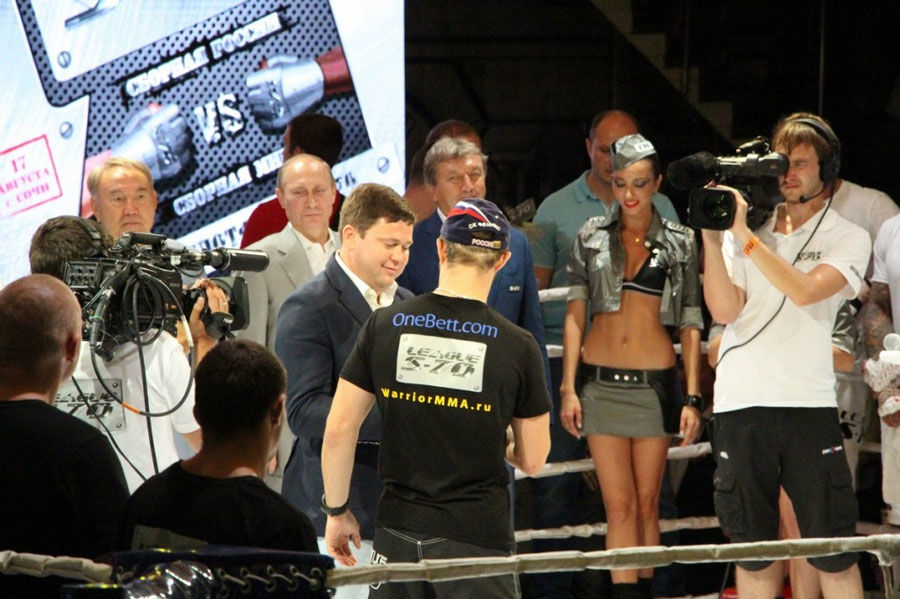
Krivonosov’s secret is apparently simple: he did not organize the tournaments alone; they were held by a certain League S-70, whose president is Putin’s longtime acquaintance Renat Layshev (president of the Sambo-70 sports school). Layshev first met Putin in the 1990s and immediately told the future president about the school
Another detail may have contributed to Krivonosov’s political career. His clubs in Sochi are known as a place where important people meet escort girls
Who else received a parliament seat for services provided to Putin and his friends
Lyudmila Narusova
Senator
Widow of St. Petersburg Mayor Anatoly Sobchak, the man who launched Putin’s political career.
Vladislav Reznik
State Duma Member
An old acquaintance of the president from their days working together as stuntmen at Lenfilm. In the late 1980s, he was deputy chairman of the board of directors of Rossiya Bank, one of the first commercial banks in the USSR. The bank’s assets were mainly formed from the funds of the Leningrad Oblast Committee. The bank became a wallet for Putin and his friends.
Vladimir Kozhin
Senator
A former long-time head of the Administrative Directorate of the President. Under him, the Kremlin, the Moscow suburbs, and other residences of the head of state were rebuilt to suit Putin’s tastes.
People involved in martial arts are generally held in high esteem, as these sports are favored by the president. At the beginning of the Putin era, the head of state’s judo sparring partner Arkady Rotenberg, a former coach and petty criminal from St. Petersburg, moved to Moscow, where bright prospects were opening up for people like him at the time. Unlike Putin, Rotenberg did not spend his youth pursuing an education. In the 1970s, thanks to the patronage of his coach with a criminal background, he obtained a degree from the Lesgaft Institute of Physical Culture, just to check the box. In the 2000s, to further improve his image, Rotenberg decided to become a candidate of sciences and came to his alma mater, which had by then become a university, to write his thesis. Rotenberg was assigned a research supervisor, Nikolai Tsed, a former special forces soldier and hand-to-hand combat trainer.
Together, Tsed and Rotenberg wrote, or rather partially plagiarized
Is there anyone in the Russian parliament who truly understands lawmaking? Yes, although there are very few such people. It would be more accurate to call them lobbyists — there are Duma members and senators who serve one master throughout their entire career (for example, an oligarch or company that got them into the parliament), and there are those who constantly change their “employers.” One of the largest lobbying groups in the parliament is made up of people from the Rostec state corporation and its head Sergey Chemezov, an old friend of the president. One of them is Senator Kavdzharadze, whom we mentioned above. His patron is Elena Sierra, one of the directors of Rostec. There are also some family lobbyists. Alfiya Kogogina has been a Duma memberfor 14 years; she is the wife of Sergey Kogogin, co-owner and CEO of KamAZ (just under half of which is controlled by Rostec). He always provided Alfiya with jobs. Back in the late 1990s, when Kogogin became Minister of Economy and Industry of Tatarstan, he placed Alfia, then his mistress, in the republic’s State Statistics Committee. When he became director of the plant, Kogogin appointed her head of the entire leasing division. The Kogogins’ numerous children from previous marriages also earn money at KamAZ. Some of them live abroad but still receive salaries from the plant. Although Alfiya herself (now Kogogin’s official wife) stated a year later in the State Duma that she “no longer thinks in terms of KamAZ” but rather in terms of the state of the Russian automotive industry as a whole, her husband’s company continues to receive billions in state subsidies and benefits, balancing on the brink of profitability for decades.
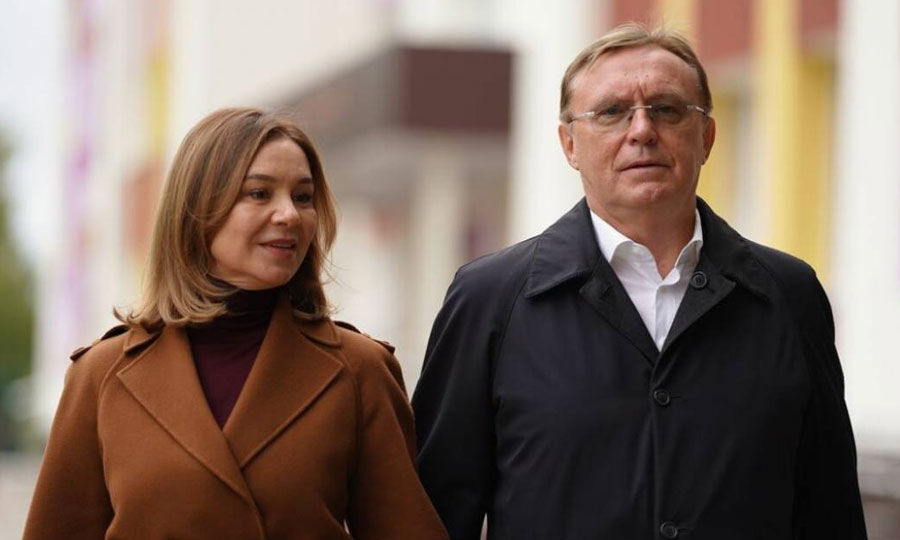
However, the most versatile and professional lobbyist in the Russian parliament is the head of the budget committee, Andrey Makarov. He has been a Duma member since 1993, with a short break, and now represents Chuvashia, Nizhny Novgorod Oblast, and Ryazan Oblast, having no connection to either of these regions. His mother was chair of the Moscow Oblast Court during the Soviet era, and his stepfather headed the capital’s bar association. Their son became something in between – as a lawyer, he defended Leonid Brezhnev’s son-in-law Yuri Churbanov, and as a prosecutor, he sent the antisemitic social activist Konstantin Smirnov-Ostashvili to prison.
It is likely that back in the 1970s, the young Makarov, who was then studying at the law faculty of Moscow State University and playing chess in his spare time, was recruited by the state security services under the code name “Tanya”. This was claimed by Vladimir Popov, a former Soviet secret service officer who oversaw sports activities in the Fifth Directorate of the KGB
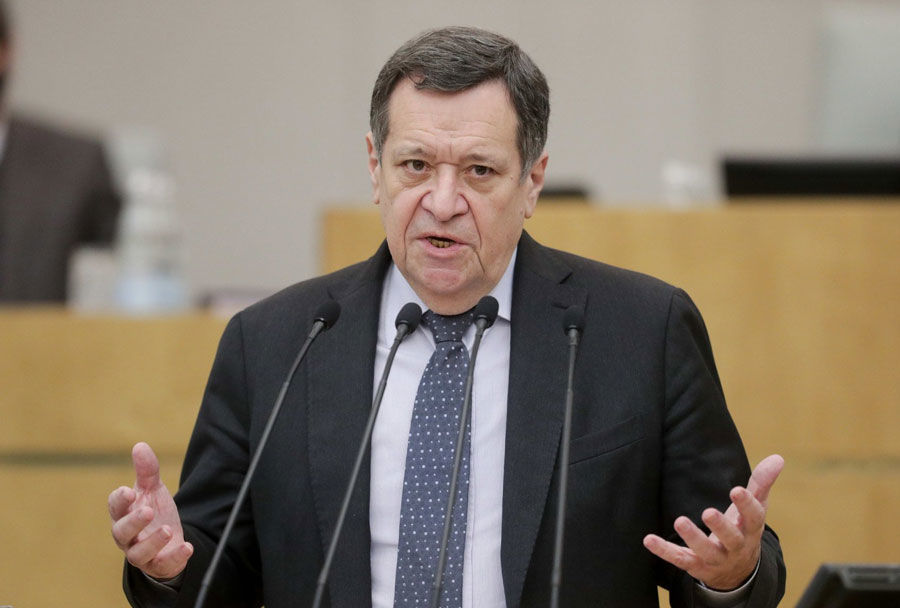
The code name stuck with Makarov for life. His colleagues in the State Duma still call him Tanya behind his back, hinting at his probable homosexuality. Makarov could work for anyone: he simultaneously lobbied for the interests of Roman Abramovich’s Evraz and the governor of the Kemerovo Oblast, communist despot Aman Tuleyev. In his spare time, he continued to play chess and even became head of the national chess federation for a time., although once again through fraud. To obtain the title of international master (preceding grandmaster), he provided data on victories in major tournaments. It quickly became clear that the results were fake, and the games presented by Makarov were copied from outstanding players of the past, including world champion Alexander Alekhine
None of this prevents Makarov from being very influential— so much so that he got two of his employees into the Duma. His firm’s lawyer, Muscovite Olga Anufrieva, became a Duma member representing the Ural regions. And the firm’s partner Mikhail Orlov became head of the expert council of the budget and tax commission.
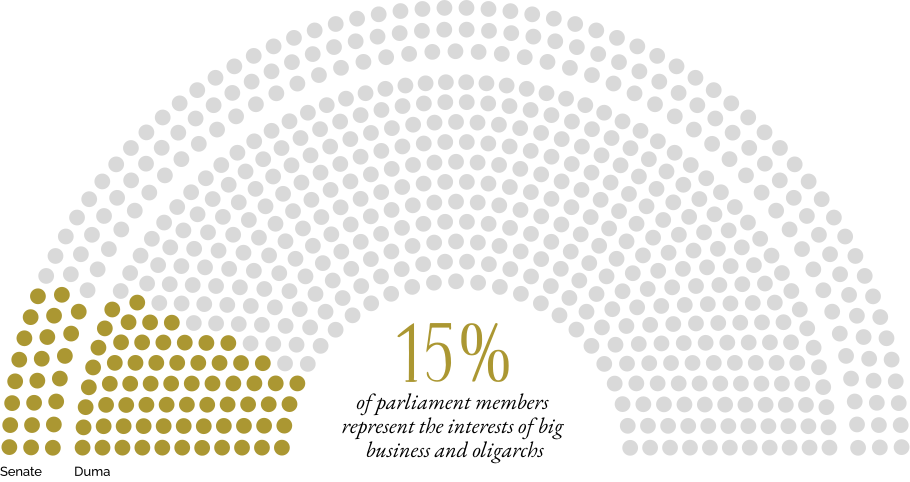
We counted at least 90 such “lobbyists” in parliament (15% of the total number of deputies and senators we studied). These are people who have a history of working in the interests of large private and state-owned resource extraction companies, developers, banks, and other businesses owned by the richest people in the country.
Both houses of parliament also have their own alcohol and tobacco lobby. For example, State Duma member Nadezhda Shkolkina, whom her enemies nicknamed “Cigarette Butt Nadya” Vladimir Senin. Even before he was elected to the Duma, he was vice president and lobbyist for Alfa Bank, but that’s not all. In 2016, he received $300,000 from Uber for helping push through the law on taxis, which, however, was never adopted. In 2021, the lobbyist was elected to the State Duma, and a year later, there was a massive leak of Uber documents, which revealed his lobbying rates. Naturally, this did not harm his career in any way. The Duma also includes representatives of the bookmaking business, such as Amir Khamitov, former CEO of Winline, one of Russia’s largest bookmaking companies, and co-owner of the Mobile Card payment system, which Putin made the sole operator of sports betting by his decree.
Sitting alongside the lobbyists in the State Duma and the Federation Council are the owners of major companies and their relatives. More than 10 years ago, the authorities promised to get rid of the rich in parliament. “There are no oligarchs on our ticket,” assured Vyacheslav Volodin, then one of the leaders of United Russia, before the 2011 Duma elections. A year later, Federation Council Chairwoman Valentina Matviyenko also seemingly began to get rid of oligarchs in the upper house. But all this was, of course, just for show.
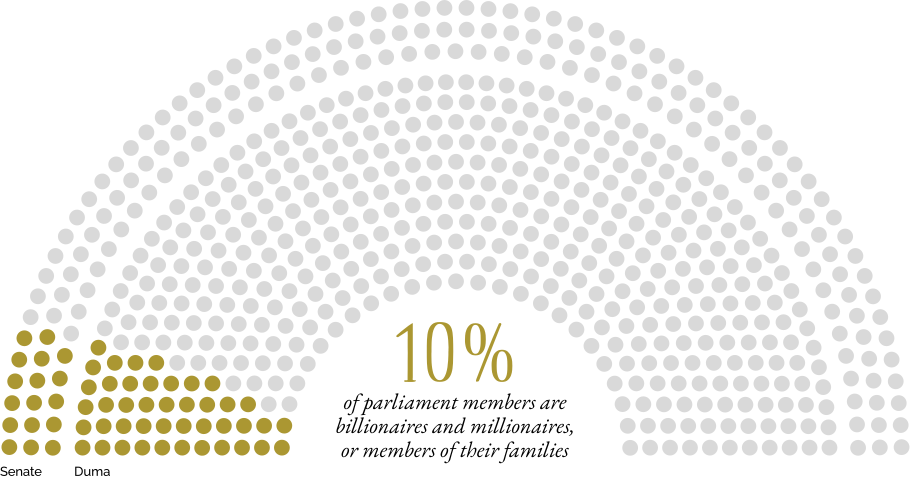
Today, about 10% of parliamentarians (60 out of 626 studied) are either billionaires and millionaires or members of their families, who have at least once been included in the Forbes and RBC rankings
The Russian parliament does not represent Russians, but it does accurately reflect the structure of the Russian regime, which is not limited to the heirs, lobbyists and gangsters mentioned above.
About 22% of all State Duma members and senators
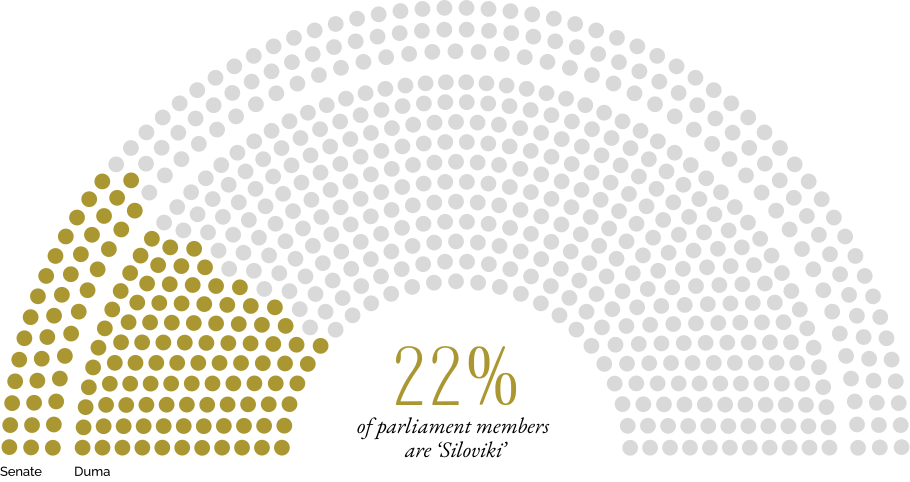
Среди них:
Ministry of Defense
71
Ministry of Internal Affairs
33
KGB and FSB
20
Prosecutor’s offices, courts and others
17
At least 18 more seats (3% of the total number of parliamentarians) in both houses are held by people who could be called “propagandists.” They are journalists, actors, singers, political scientists and political strategists, as well as regulars on anti-Western talk shows and Kremlin propaganda events.
The heads of both houses of parliament are no different from their colleagues. State Duma Chairman Volodin registers his business in the name of his elderly mother, who worked as a teacher in a rural village her entire life. Chairwoman of the Federation Council Valentina Matviyenko used her drug-addicted son in the same way. The story of Matviyenko and other women important to Putin will be told in the next part of this special project.